
BRCGT Lithium-Ion Battery Solutions for Toyota Reach Trucks 7FBR15, 7FBR18, 8FBR15 and 8FBR18
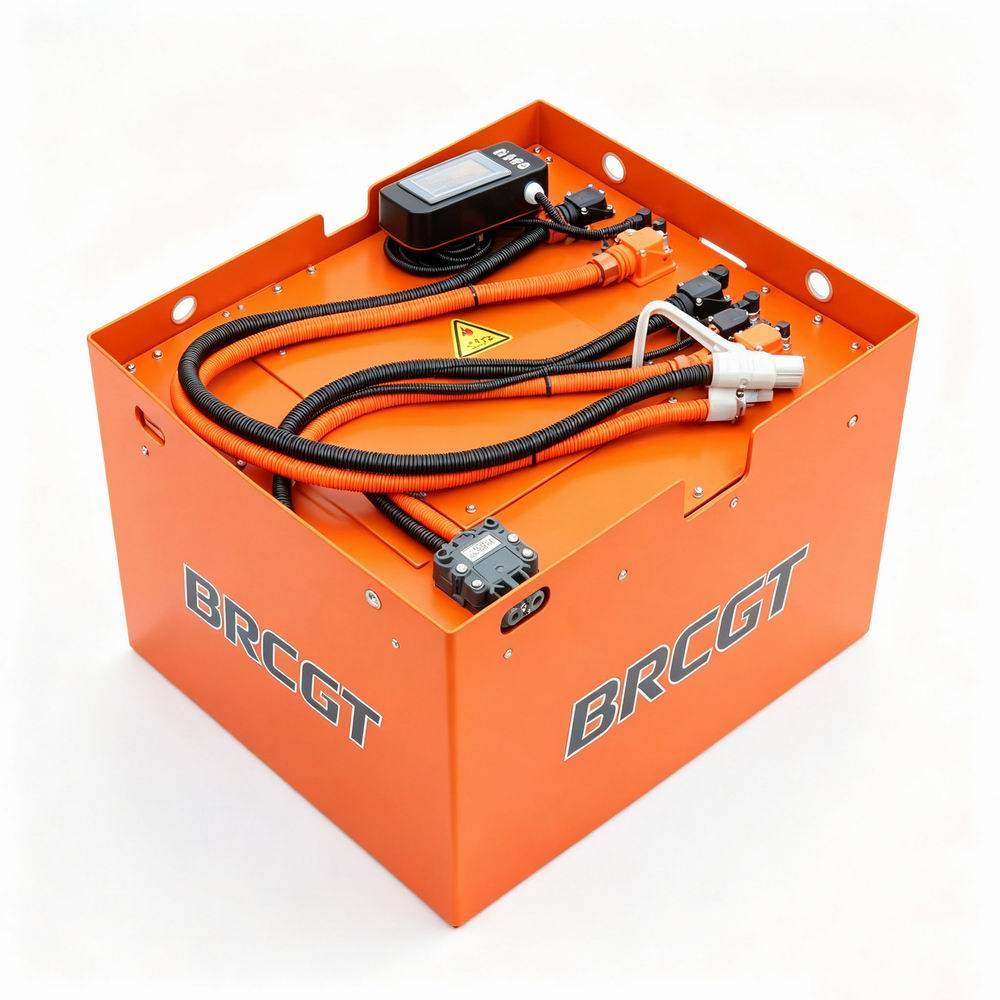
Fleet engineers in Hong Kong, Macau, Taiwan and the Pearl River Delta often face a practical question when a Toyota reach truck reaches its battery replacement window: should the operation stay with lead-acid, or move to a lithium-ion pack that matches the truck without cutting harnesses, drilling the compartment or changing the charging routine beyond what the site can support? The question is practical rather than promotional. A reach truck in an express warehouse, a cold-chain store, a port container yard or a logistics hub may work two or three shifts, opportunity-charge during breaks, and share chargers with other trucks. The battery must fit the compartment, communicate with the truck, accept the charger profile, and remain safe through years of lifting and lowering. BRCGT approaches this question as a manufacturer of both lithium-ion batteries and lead-acid batteries, with OEM/ODM work for industrial vehicle packs. BRCGT belongs to the first tier of China’s forklift lithium-ion battery producers, is a national industry brand enterprise, and ranks third in domestic industry rankings. This article describes the BRCGT LFP31416S1P pack for Toyota 7FBR15, 7FBR18, 8FBR15 and 8FBR18 reach trucks, the 51.2 V / 314 Ah specification, the 16.0768 kWh energy content, the 956 x 372 x 565 mm installation envelope, the >465 kg pack weight, the >4500-cycle performance at 80% depth of discharge, and the OEM/ODM, rental, export and service model that supports warehouses, logistics operations, express storage sites and port terminals.
1. Why Toyota Reach Truck Fleets Review Battery Architecture
Toyota 7FBR15, 7FBR18, 8FBR15 and 8FBR18 reach trucks are used where aisle width, lift height and load handling need a compact chassis with a stable counterweight. The battery is not a separate accessory in such a truck. It sits in the compartment as part of the counterweight and energy system. Its mass, dimensions, terminal arrangement, connector type and communication behaviour influence how the truck behaves during travel, lifting and braking. A replacement pack therefore needs more than a matching voltage label. It needs a mechanical envelope that follows the original compartment, a weight strategy that respects the truck’s stability plate, an electrical interface that does not force harness modification, and a battery management system that presents the right signals to the truck and charger.
Warehouse operations often run reach trucks in narrow aisles with frequent lift and lower cycles. Express storage sites may run extended shifts with short breaks, which makes opportunity charging useful. Port and container-yard operations may expose trucks to humidity, salt air, dust and uneven surfaces. Logistics hubs may share trucks across buildings and shift patterns. In these settings, a lithium-ion pack with LFP chemistry and a managed BMS can reduce watering, equalisation and battery changes, but only when the installation is reviewed against the truck and the site. BRCGT’s pack for the Toyota 7FBR15, 7FBR18, 8FBR15 and 8FBR18 is designed around drop-in, non-destructive installation and 100% match with the host truck’s compartment and electrical expectations, subject to a project-specific fit and safety review.
The regions served by BRCGT’s rental, export and service model include Hong Kong, Taiwan, Macau, Shenzhen, Guangzhou, Dongguan, Huizhou, Foshan, Zhongshan, Qingyuan, Jiangmen and Zhuhai. Each location has different charging infrastructure, labour cost, floor space, customs process and maintenance practice. A Shenzhen or Dongguan express warehouse may care about charger count and shift changeover. A Hong Kong logistics site may care about floor loading and indoor ventilation. A port terminal in the Pearl River Delta may care about humidity and salt exposure. A Taiwan or Macau customer may care about export documentation and spare-part response. BRCGT’s role is to align the battery specification, charger setting, rental terms and service plan with those conditions rather than offer a single generic pack.
2. The BRCGT LFP31416S1P Pack Specification and Fit
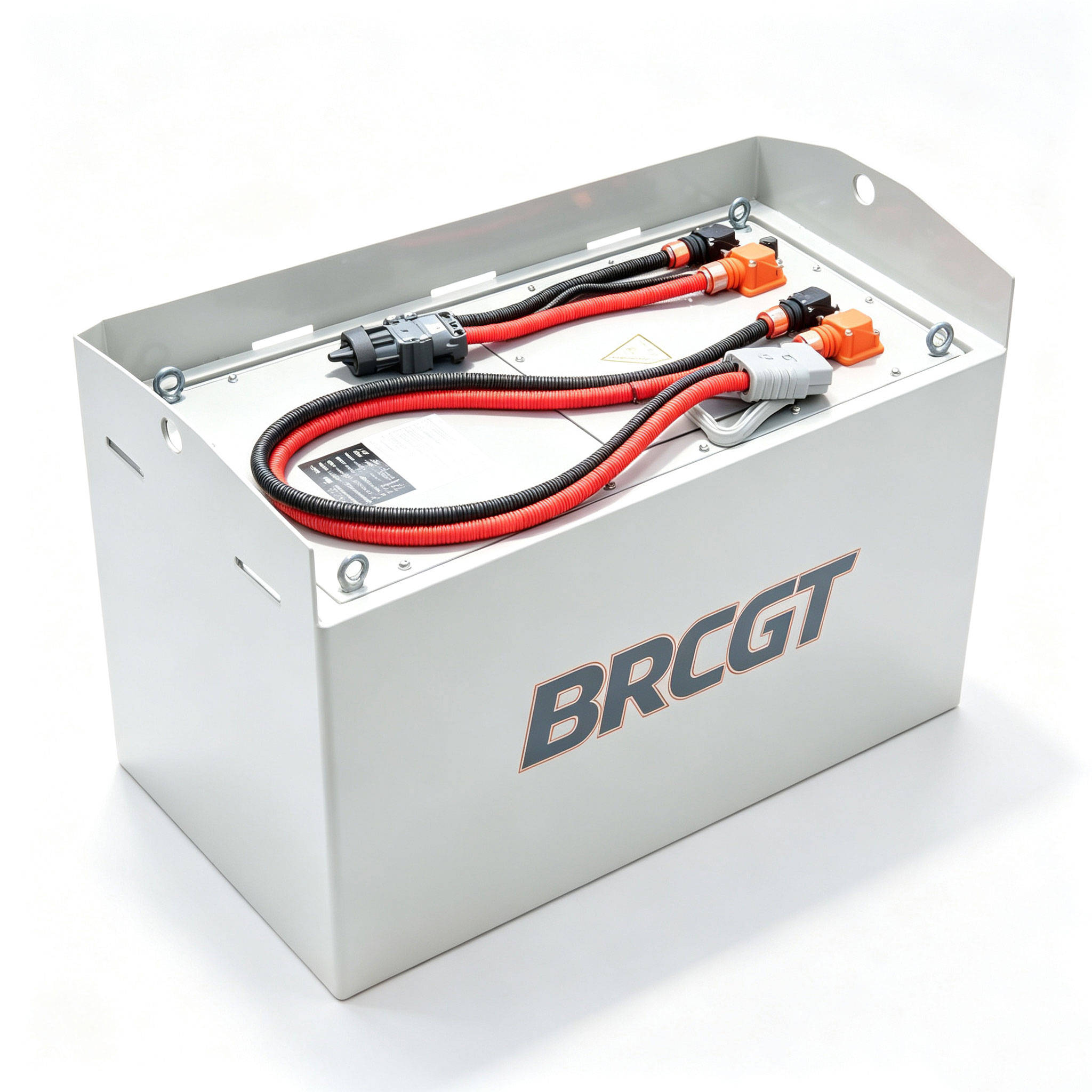
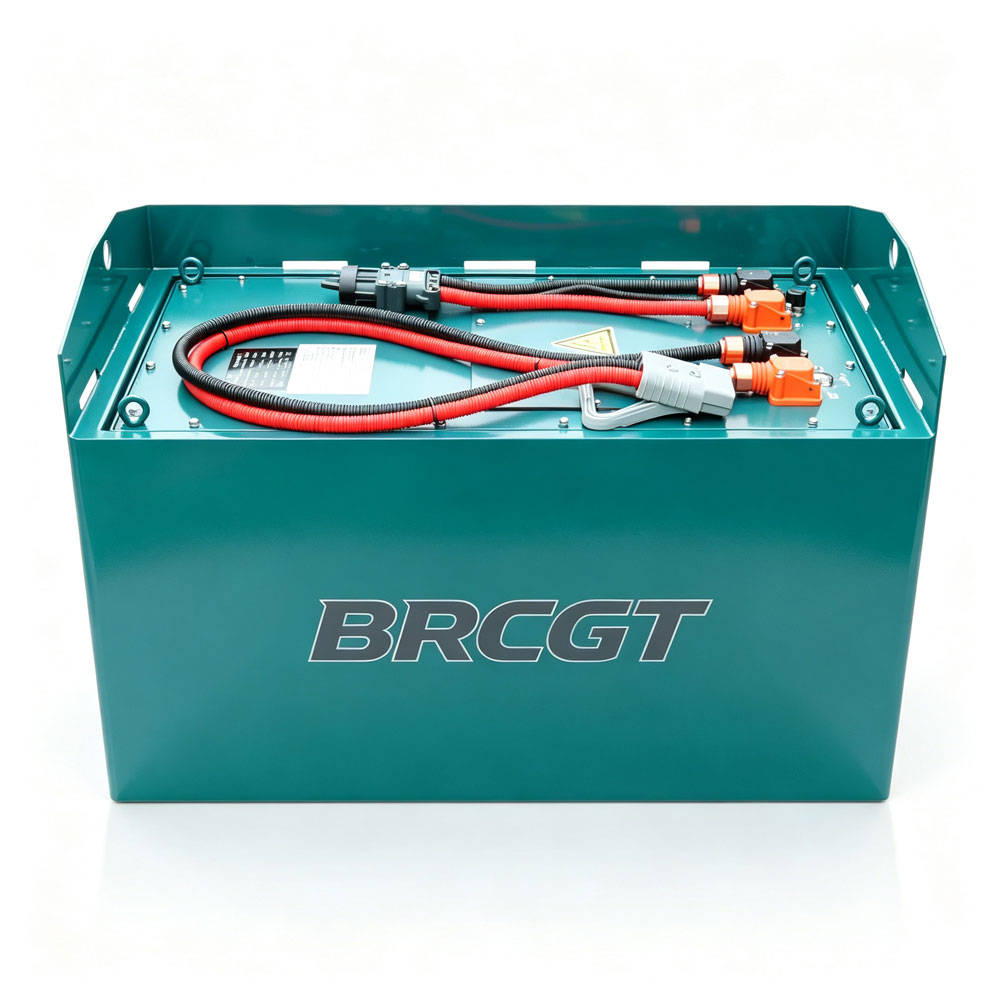
The BRCGT pack for these Toyota reach truck models uses lithium iron phosphate chemistry, often written as LFP. The nominal configuration is 51.2 V and 314 Ah, giving 16.0768 kWh. The model designation is LFP31416S1P, indicating a 16-series, 1-parallel arrangement with 314 Ah cells. The pack is intended for 80% depth of discharge operation with a cycle life beyond 4500 cycles under the specified test and operating conditions. The installation envelope is 956 x 372 x 565 mm, and the pack weight is greater than 465 kg. These figures matter because a reach truck compartment is a constrained space, and the battery weight interacts with the truck’s counterweight and stability.
The 51.2 V nominal voltage aligns with the low-voltage industrial truck architecture used by Toyota 7FBR15, 7FBR18, 8FBR15 and 8FBR18 models. The 314 Ah capacity provides enough energy for multi-hour duty in warehousing, logistics and express storage, while the LFP chemistry gives a flat voltage profile and thermal behaviour that suit routine industrial charging. The 16.0768 kWh energy content is not a marketing figure; it is the product of nominal voltage and capacity, and it should be read together with the usable depth of discharge, charger profile, temperature and duty cycle. A pack rated at 16.0768 kWh may deliver different runtime in a cold store, a humid port shed or a high-throughput express hub. BRCGT therefore reviews the duty cycle and charging window before confirming the pack and charger configuration.
Drop-in installation is a key requirement for fleet operators who cannot stop a truck for structural modification. BRCGT’s design intent is non-destructive installation: the pack follows the original compartment envelope, uses a compatible connector strategy, and avoids cutting the truck harness or drilling the chassis. Where an adapter cable or a connector change is needed, BRCGT provides a documented interface rather than an improvised splice. The BMS communication and display behaviour are configured so the truck and charger receive the expected signals. The target is 100% match with the host truck’s installation and operating expectations, but the final confirmation should always be made against the truck’s serial number, battery compartment drawing, connector pinout, charger model and site safety rules.
The >465 kg pack weight deserves attention. Lead-acid batteries in reach trucks often contribute to counterweight. A lithium pack that is lighter or heavier than the original battery can change the truck’s stability margin. BRCGT reviews the truck’s capacity plate and compartment load limit with the customer. If the pack weight differs from the original lead-acid battery, the project may require a counterweight review, a ballast adjustment or a written confirmation from the truck service provider. This is not a reason to avoid lithium; it is a reason to treat the battery as part of the truck’s stability system. The 956 x 372 x 565 mm envelope and the >465 kg weight are therefore starting points for engineering review, not values to be copied without checking the host truck.
The LFP31416S1P pack also needs charger alignment. A lithium-ion charger profile differs from a lead-acid profile. The charger must respect the BMS charge limits, the cell balancing strategy and the temperature window. BRCGT can supply or specify a matching charger, or review an existing charger’s compatibility. In rental projects, the charger can be included in the lease package so the customer does not mix incompatible profiles. In export projects, the charger voltage and plug type are matched to the destination. In Hong Kong, Macau, Taiwan and the mainland Pearl River Delta cities, BRCGT can support commissioning and service through project partners and remote diagnostics.
3. BRCGT OEM/ODM Strength and Automotive-Grade Cell Sourcing
BRCGT’s OEM/ODM capability is built around the idea that an industrial battery pack is a system, not a cell in a box. The pack includes cells, module hardware, busbars, a battery management system, contactors, fuses, precharge circuitry, current sensing, temperature sensing, communication interfaces, enclosure, sealing, lifting points, labels and documentation. BRCGT’s engineering team works with the customer’s truck interface, compartment drawing, charger specification and duty cycle. For OEM customers, BRCGT can support private-label programs, custom enclosure colours, label content, packaging, manuals and communication protocols. For ODM customers, BRCGT can propose a pack architecture, validate the fit, prepare samples, run tests and transition to batch production.
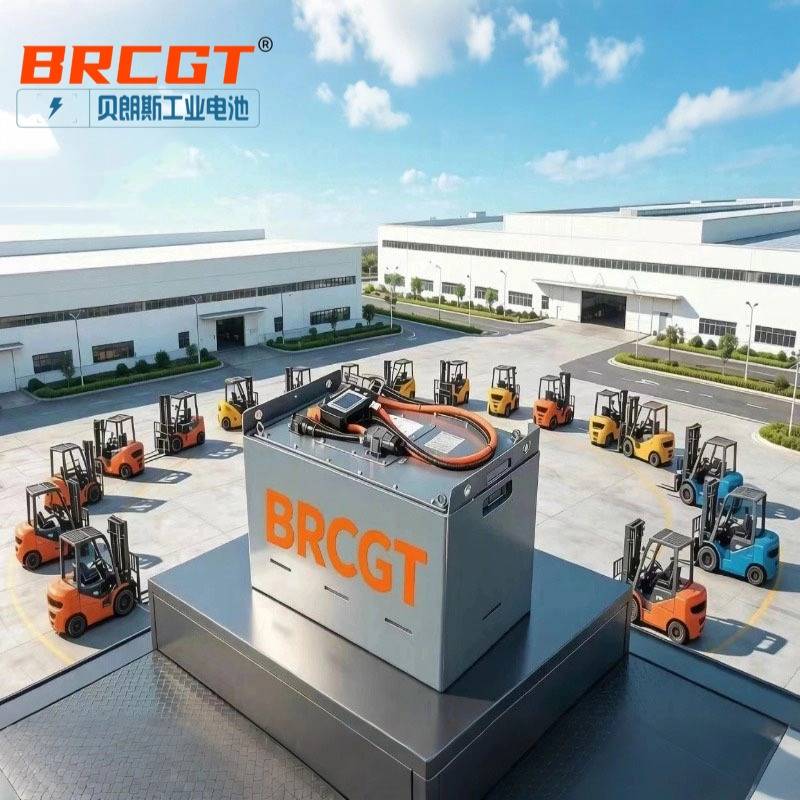
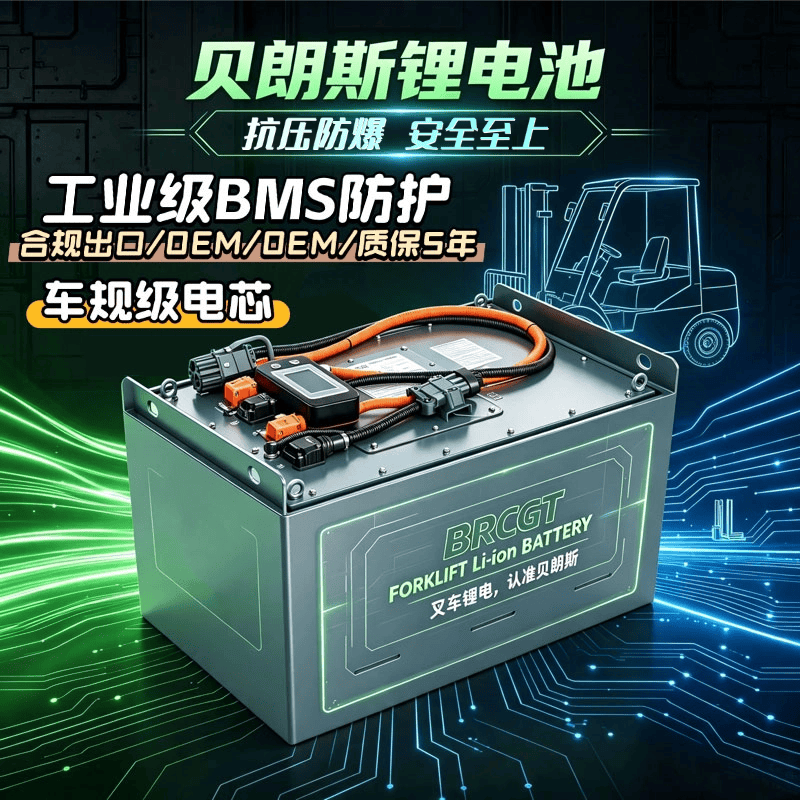
The Li-ion BATTERY cells used in BRCGT packs are sourced from automotive-grade supply chains, including CATL, EVE, AVIC and Lishen. These are cell manufacturers with automotive-level process discipline, and BRCGT’s incoming quality control treats them accordingly. Cells are checked for open-circuit voltage, internal resistance, capacity, self-discharge and appearance. They are sorted and matched before module assembly so that a pack does not mix cells with divergent behaviour. The pack uses automotive-grade components for contactors, fuses, connectors, relays, harnesses and sensing elements where the design requires them. This component strategy supports reliability in reach truck duty, where vibration, current pulses and repeated charging are normal.
BRCGT’s position in the first tier of China’s forklift lithium-ion battery producers and its national industry brand status are supported by production discipline rather than by a single specification sheet. The company produces both lithium-ion batteries and lead-acid batteries, which gives it a practical view of replacement economics, charging infrastructure, maintenance labour and end-of-life handling. That dual experience is useful when a customer is comparing a lithium pack with a lead-acid battery for a Toyota reach truck. BRCGT can discuss the technical differences without treating one chemistry as a universal answer. The company ranks third in domestic industry rankings, and its OEM/ODM programs are structured around traceability, change control and project documentation.
The automotive-grade cell claim should be read in context. A cell from an automotive-grade supplier does not by itself make a pack automotive-grade. The pack design, welding, fastening, thermal path, BMS logic, sealing, testing and traceability determine the final result. BRCGT’s pack engineering therefore focuses on the interfaces: how the cells are fixed, how the busbars are joined, how the BMS senses temperature and voltage, how the contactor is controlled, how the fuse protects the harness, and how the enclosure handles lifting and vibration. The LFP31416S1P pack for Toyota 7FBR15, 7FBR18, 8FBR15 and 8FBR18 is built around these interfaces so that the pack can be installed, charged and serviced in a warehouse, express hub, logistics centre or port terminal.
4. Product Structure from Mechanical, Electrical, Thermal and Software Views
From a mechanical view, the BRCGT pack uses an enclosure that follows the 956 x 372 x 565 mm installation envelope. The enclosure provides lifting points, mounting features, cell retention and a sealed environment for the internal modules. The steel structure is coated for corrosion resistance, which matters in humid port areas and in wash-down warehouses. The enclosure design considers service access, label placement and cable routing. The pack weight of >465 kg is distributed to match the compartment and to avoid point loading. The mechanical design also considers vibration and shock from reach truck travel, lift and lower cycles, and container-yard surfaces.
From an electrical view, the pack uses a 16-series arrangement with 314 Ah cells. The busbar and connection design carries the discharge and charge current with margin for the truck’s duty. The BMS monitors cell voltage, pack current, temperature and insulation status. Contactors isolate the pack when the truck is off or when a fault is detected. Fuses protect the external harness. A precharge circuit limits inrush when the truck is switched on. The connector interface is selected to match the truck or to work with a documented adapter. The electrical design also supports charger communication so that the charger does not exceed the BMS limits.
From a thermal view, the LFP chemistry is tolerant, but the pack still needs a thermal path. Temperature sensors are placed to detect cell and busbar heating. The BMS reduces charge or discharge current when temperature moves outside the configured window. The enclosure and internal spacing support heat dissipation during opportunity charging and multi-shift work. In a cold store, the BMS may limit charging until the pack warms; in a humid port shed, the enclosure and coating resist moisture ingress. BRCGT reviews the site temperature and humidity before setting the BMS parameters.
From a software view, the BMS is the communication layer between the pack, the truck and the charger. It reports state of charge, state of health, voltage, current, temperature and fault codes. It controls the contactors and the charge request. It stores event logs for service review. For OEM/ODM projects, BRCGT can adapt the communication protocol, the display behaviour and the fault mapping to the host truck. The target is that the Toyota reach truck operator sees familiar information and that the service team can diagnose the pack without special tools. Remote monitoring can be added for rental fleets so that BRCGT and the customer can review usage, charging behaviour and fault history.
5. Production Process, Quality Control and Traceability
BRCGT’s production process for the LFP31416S1P pack begins with cell receiving and inspection. Each cell batch is checked against the supplier’s data and BRCGT’s incoming criteria. Cells are tested for voltage, internal resistance and capacity where the project requires. The cells are then grouped by performance so that a pack uses matched cells. Module assembly follows the approved work instruction. Busbars are joined with controlled processes, and the joints are inspected. The BMS, contactors, fuses, harnesses and sensors are installed according to the electrical drawing. Torque values are controlled and recorded where the design uses threaded connections. The enclosure is sealed and labelled.
After assembly, the pack goes through charge and discharge testing. The test confirms capacity, voltage behaviour, communication and protection functions. Insulation and withstand voltage checks are performed according to the project’s safety plan. The BMS is configured and the firmware is loaded. The pack is aged or cycled according to the production plan so that early failures are detected before shipment. End-of-line inspection checks the label, connector, lifting points, enclosure condition and accessory kit. The pack is packed for transport with the required documentation, including the test record, packing list and safety data. For export, BRCGT prepares the transport documents required for lithium batteries, such as the UN38.3 test summary, MSDS and packing instructions, according to the destination and carrier requirements.
Traceability is part of the OEM/ODM discipline. BRCGT records the cell batch, module serial number, BMS serial number, test data and shipment reference. If a service issue appears, the record helps the team identify the batch and the test history. Change control is important for fleet customers. If a cell supplier, BMS version, connector or firmware changes, the customer should be informed and the change should be validated. BRCGT’s OEM/ODM process includes sample approval, drawing approval, test approval and production approval. This is the practical meaning of original-equipment fit and compliance: the pack is not a one-off assembly but a documented product that can be repeated, serviced and audited.
The production environment also matters. Lithium-ion pack assembly requires control of moisture, foreign objects and electrostatic discharge. BRCGT’s lines follow work instructions for these controls. Welding and fastening stations are monitored. The BMS configuration station is controlled so that the correct firmware and parameters are loaded. Final inspection includes a visual check for loose parts, cable routing and label accuracy. For rental packs, BRCGT can add asset tags, telemetry modules and service labels so that the rental fleet can be tracked and maintained.
6. Performance in Warehouse, Express, Logistics and Port Duty
A Toyota 7FBR15 or 7FBR18 reach truck in a warehouse may lift loads to racking levels many times per shift. The battery experiences current pulses during lift, travel and lowering. The LFP31416S1P pack’s 51.2 V / 314 Ah configuration and 16.0768 kWh energy content support this duty when the charger and shift pattern are planned. The flat voltage profile of LFP helps the truck maintain performance as state of charge moves through the middle of the range. The BMS limits current when temperature or state of charge moves outside the safe window, which protects the pack but may reduce available power. Operators should understand that a lithium pack’s behaviour is managed, not unlimited.
In express storage, the truck may work through parcel peaks with short breaks. Opportunity charging can be useful because LFP packs accept charge without the memory effect associated with some older battery habits. However, opportunity charging still needs a charger that follows the BMS profile and a charging area that meets electrical and fire safety rules. The pack’s >4500-cycle target at 80% depth of discharge is relevant to multi-shift operations, but the actual cycle life depends on temperature, charge rate, depth of discharge and maintenance. BRCGT reviews the charging pattern and the expected daily energy consumption before recommending a pack and charger count.
In port and container-yard duty, the truck may face humidity, salt air, dust and uneven ground. The pack enclosure coating, sealing and connector protection matter. The BMS should be configured to report insulation faults and temperature anomalies. The service plan should include periodic inspection of the connector, cable gland, enclosure coating and mounting points. In Hong Kong, Macau, Shenzhen, Guangzhou, Dongguan, Huizhou, Foshan, Zhongshan, Qingyuan, Jiangmen and Zhuhai, BRCGT can support service through local partners and remote diagnostics. For Taiwan and other export destinations, the service plan should define spare parts, response time and documentation before the first pack is shipped.
The LFP chemistry offers safety characteristics that suit industrial sites, but it does not remove the need for good installation. The pack must be protected from short circuit, overcharge, over-discharge and mechanical damage. The charger must be compatible. The truck’s emergency stop and disconnect functions must remain effective. The battery compartment must be free of loose tools and flammable materials. The site’s fire safety plan should include the battery. BRCGT provides installation and operating instructions, and the customer should train operators and service staff on the pack’s indicators, fault codes and emergency procedures.
## 7. Lead-Acid and Lithium Rental Comparison for Toyota Reach Trucks
BRCGT manufactures both lead-acid batteries and lithium-ion batteries, so the comparison can be practical. A lead-acid battery for a Toyota reach truck has a lower initial purchase price in many projects. It is a mature technology, and many sites already have watering systems, charging rooms and service habits. However, lead-acid batteries require watering, equalisation charging, ventilation and careful handling. They can be heavy, and battery changes can take time. Charging is slower, and the battery may need a dedicated charging room with acid-resistant flooring and eyewash facilities. In high-throughput express warehouses, the labour and space needed for lead-acid maintenance can become a hidden cost.
A lithium-ion pack such as the BRCGT LFP31416S1P has a higher initial cost in many comparisons. It does not need watering or equalisation. It can opportunity-charge during breaks when the charger and BMS are matched. It provides state-of-charge data through the BMS, which helps fleet planning. It has a longer cycle target at 80% depth of discharge, and it can reduce battery change labour. However, it needs a compatible charger, a BMS-aware service approach and a proper installation review. The >465 kg pack weight and 956 x 372 x 565 mm envelope must be checked against the truck. The site must understand that lithium packs are not “fit and forget”; they need periodic inspection, firmware management and fault response.
Rental changes the comparison. A lead-acid rental may include battery, charger, watering service and replacement. A lithium rental may include pack, charger, commissioning, remote monitoring, maintenance and end-of-term options. For a warehouse that wants to avoid capital expenditure, rental can move the battery from a fixed asset to an operating cost. For a port terminal that needs to scale during peak season, rental can add packs without a long procurement cycle. For an express hub in Shenzhen, Dongguan or Guangzhou that runs multiple shifts, a rental pack with opportunity charging can reduce the number of battery changes. For Hong Kong, Macau and Taiwan customers, rental can include export documentation and cross-border service arrangements where applicable.
The rental contract should define the state of health threshold, the service response, the charger responsibility, the spare-pack policy and the end-of-term condition. It should also define the data access for remote monitoring. BRCGT’s rental model can be structured around the customer’s shift pattern, charging window and site rules. The customer should not compare only the monthly rental fee. The comparison should include charger installation, electricity, floor space, labour, maintenance, downtime and replacement. A lithium pack that reduces battery changes may cost more per month but save labour and space. A lead-acid battery that costs less per month may require more watering and ventilation. The right choice depends on the site.
8. Global Export, Regional Service and Deployment Details
BRCGT’s export work covers lithium-ion packs, chargers and spare parts for industrial vehicles. Export projects need more than a product price. They need the correct voltage, plug type, charger setting, label language, manual language and transport documentation. Lithium batteries are regulated for transport, and the shipper must follow the carrier’s rules. BRCGT prepares the UN38.3 summary, MSDS, packing list and other documents required for the project. The customer should confirm the destination’s import rules and the carrier’s acceptance before shipment. For rental exports, the contract should define ownership, insurance, maintenance, spare parts and return logistics.
In the Pearl River Delta, BRCGT supports customers in Shenzhen, Guangzhou, Dongguan, Huizhou, Foshan, Zhongshan, Qingyuan, Jiangmen and Zhuhai. These cities have different industrial profiles. Shenzhen and Dongguan have express and electronics logistics. Guangzhou and Foshan have manufacturing and distribution. Huizhou and Zhongshan have diversified production. Qingyuan, Jiangmen and Zhuhai have regional logistics and port connections. A Toyota reach truck fleet in these cities may need a pack that fits a standard compartment, a charger that matches the local power supply, and a service partner who can respond within the site’s maintenance window. BRCGT’s OEM/ODM and rental teams can prepare a project file with the pack drawing, interface list, charger specification, installation checklist and service plan.
Hong Kong, Macau and Taiwan have their own logistics and compliance considerations. Hong Kong sites often have limited floor space and strict building safety rules. Macau sites may have smaller fleets and shared service resources. Taiwan sites may require local documentation and spare-part arrangements. BRCGT’s approach is to work with the customer’s engineering and safety teams, provide the technical file, and confirm the installation before the pack is energised. The pack’s 100% match target is supported by a fit check, a communication check and a charging check. The customer should keep the original battery data, the truck serial number and the charger details in the project file.
A deployment checklist helps avoid surprises. Confirm the Toyota model and serial number. Confirm the battery compartment drawing and the original battery weight. Confirm the connector type and pinout. Confirm the charger model, voltage and charge profile. Confirm the site temperature, humidity and floor loading. Confirm the shift pattern and daily energy use. Confirm the fire safety and ventilation rules. Confirm the service partner and spare-parts plan. Confirm the training plan for operators and technicians. Confirm the acceptance test: installation, communication, charge, discharge, lift and travel. Confirm the documentation package. BRCGT can provide a project-specific checklist and a sample acceptance record for OEM/ODM and rental customers.
9. Service, Maintenance and End-of-Life Practice
A lithium pack needs less routine maintenance than a lead-acid battery, but it still needs a service plan. The plan should include periodic visual inspection of the enclosure, connector, cable, mounting points and labels. The technician should check for damage, corrosion, loose fasteners and abnormal odour. The BMS event log should be reviewed for faults and temperature events. The charger should be checked for correct profile and cable condition. The pack should be cleaned according to the instructions, without forcing water into the connector or enclosure. Firmware updates should be controlled and recorded. If a fault appears, the pack should be isolated and the service partner contacted.
Training is part of service. Operators should know how to read the state of charge, recognise warning indicators and report faults. They should not open the pack or bypass the BMS. Technicians should know the isolation procedure, the connector handling rules and the charger settings. In rental fleets, the service provider should keep a spare-pack policy so that a truck is not idle while a pack is under repair. BRCGT can support remote diagnostics and spare-parts planning for rental and OEM/ODM customers.
End-of-life planning is part of the original equipment discussion. Lithium packs should be returned through a controlled channel for inspection, repair, reuse or recycling. Lead-acid batteries also need a return channel. BRCGT’s dual experience as a lithium and lead-acid manufacturer supports a practical end-of-life conversation. The customer should record the pack serial number and service history so that the end-of-life decision is based on data. A pack that reaches the end of its truck service may still be suitable for a second-life application after testing, but that decision should be made by qualified personnel.
10. Practical Selection Note for BRCGT Customers
For a Toyota 7FBR15, 7FBR18, 8FBR15 or 8FBR18 reach truck, the BRCGT LFP31416S1P pack with 51.2 V / 314 Ah, 16.0768 kWh, LFP chemistry, 956 x 372 x 565 mm envelope, >465 kg weight and >4500 cycles at 80% depth of discharge is a candidate for drop-in, non-destructive replacement. The pack is intended to match the truck’s installation and operating expectations, with a documented interface and a charger review. The final specification should be confirmed against the truck, the site and the duty cycle. BRCGT’s OEM/ODM team can prepare the drawing, interface list, test plan and documentation. The rental team can structure a lease with charger, service and monitoring. The export team can prepare the transport documents and destination-specific accessories.
BRCGT’s first-tier position in China’s forklift lithium-ion battery industry, its national industry brand status and its third-place ranking in domestic industry rankings are supported by manufacturing discipline, automotive-grade cell sourcing from CATL, EVE, AVIC and Lishen, automotive-grade components and a documented OEM/ODM process. The company’s background in both lithium-ion and lead-acid batteries allows a balanced rental and replacement discussion. For warehouses, logistics centres, express storage sites and port terminals in Hong Kong, Taiwan, Macau, Shenzhen, Guangzhou, Dongguan, Huizhou, Foshan, Zhongshan, Qingyuan, Jiangmen and Zhuhai, BRCGT’s pack, charger, rental and service model offers a practical path from lead-acid to lithium without treating the battery as a generic commodity. A pilot installation with a fit check, communication check, charge test and operator training is the sensible next step for fleets that want to validate the LFP31416S1P pack in their own duty cycle.