There’s a saying that the biggest difference between humans and robots is that humans can anticipate. Athletes and esports players, for example, often react physically before their opponent has finished making a move.
But this claim no longer holds true in 2026. Today, anticipation is no longer an absolute dividing line between humans and robots. Put simply, technology is endowing robots with this very capability. The difference is that human anticipation arises naturally from consciousness, experience and intuition, while robotic anticipation is a form of "computational prediction" built on data, models and computing power — in other words, what we call the robot’s "brain".
In recent months, there has been a flurry of news about giving robots the ability to "think one step ahead".
At the Beijing Zhiyuan Conference in mid-June, Zhipingfang unveiled NeuroVLA, the world’s first brain-inspired embodied intelligence system, which redesigns the robot’s brain to mirror the three-layer structure of the human brain: cortex, cerebellum and spinal cord.
Also in June, Qianxun Intelligent’s Spirit v1.6 claimed the top overall score in the RoboArena benchmark, surpassing NVIDIA’s Cosmos3 and Physical Intelligence’s π0.5 to become the first Chinese model to top the list.
After half a year of debate between VLA and world model approaches with no clear winner, brain-inspired architecture has suddenly emerged as the new buzzword. Just how intense has the competition in robotic brain technology become? Here’s Lei Technology’s analysis.
VLA and World Models Converge, Brain-Inspired Architectures Emerge
For the past two years and more, VLA has been the dominant narrative in embodied intelligence.
Short for Vision-Language-Action large model, VLA essentially enables robots to translate what they see and hear into physical actions. Google’s RT series, Physical Intelligence’s π0, Zhipingfang’s GOVLA, Zhiyuan’s GO-1 and Qianxun’s Spirit series all broadly follow this path.
VLA excels at semantic understanding: tell it to put an apple on the table into a basket, and it can plan a reasonable trajectory. But its shortcomings are equally clear: its understanding of the physical world relies heavily on experience learned from training data. When tasks grow more complex, execution takes longer, or the robot encounters objects and environments not seen in training, the model is prone to judgment errors and may gradually drift away from the original task goal during execution.
As a result, the industry has begun introducing world models.
A world model can be thought of as a rehearsal system inside a robot’s mind. Before taking real action, the robot first predicts how the environment might change and what outcomes its own movements could produce.For example, if a robotic arm reaching for a cup from the side might knock over a nearby plate, it needs to plan an alternative path in advance.
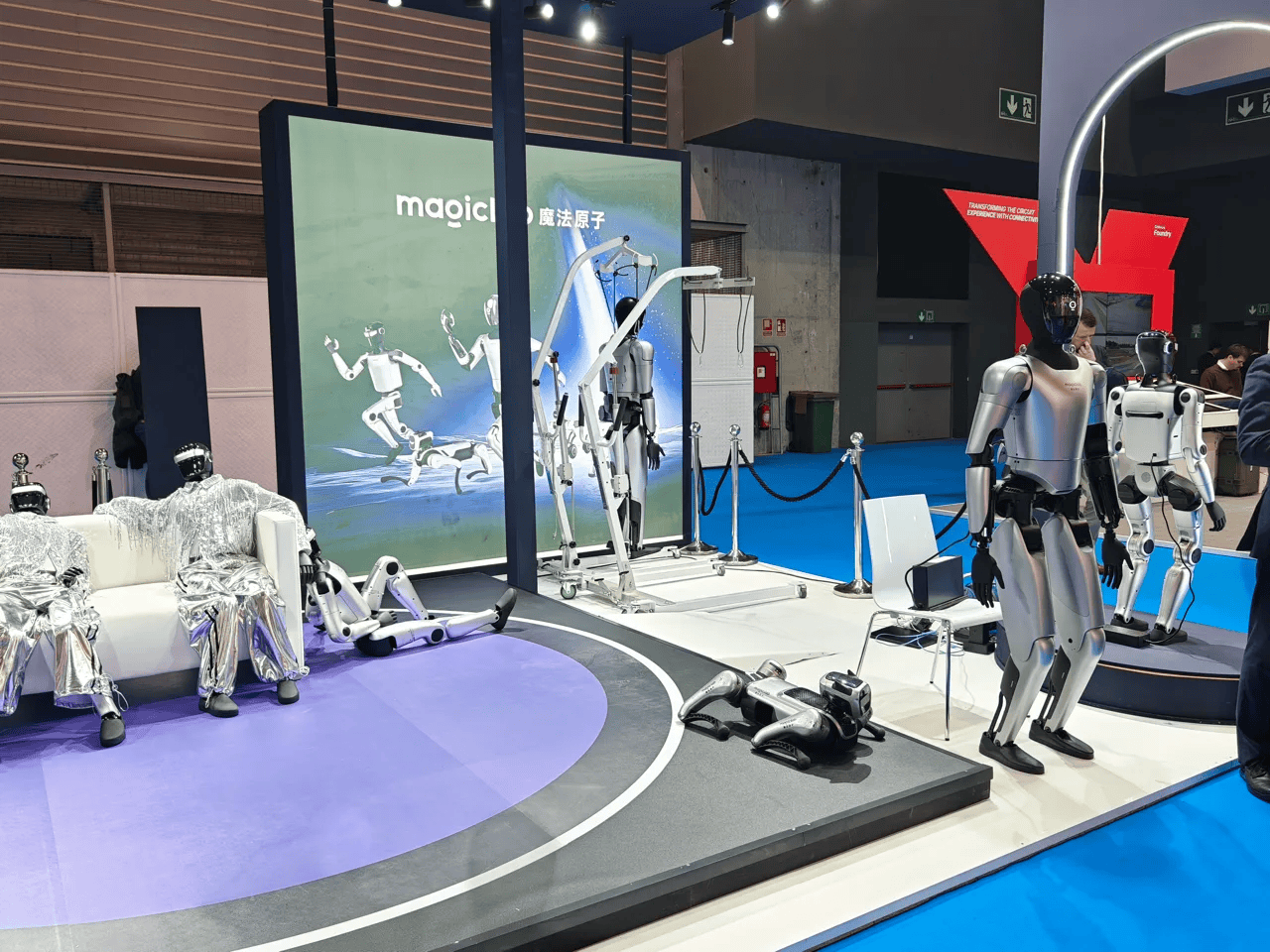
Image source: LeiTech
The key here is equipping robots with the ability to predict environmental changes. Where they once relied primarily on learned motor experience, researchers now want them to infer what might happen next based on the current environment and choose the most appropriate action accordingly.